One of the most popular pieces of career advice in recent years is also one of the most misleading: increase your luck surface area.
The advice usually sounds like this: attend more events, meet more people, expand your network, say yes more often, and put yourself out there. The underlying assumption is simple — the more interactions you create, the more serendipity you will experience.
It feels optimistic and proactive. It also happens to be incomplete in a way that can become costly.
The Lottery Ticket Logic
Imagine someone who buys lottery tickets. He starts with one ticket per week. Convinced that more tickets must improve his odds, he increases his purchases — first to ten, then twenty, then fifty. At some point he declares that he has dramatically expanded his “luck surface area.”
Has he become luckier? No. He has simply increased his exposure and his losses. The underlying probabilities have not changed in his favour. What has grown is the rate at which money leaves his account.
Much of the current advice on luck surface area follows remarkably similar reasoning. It treats serendipity as primarily a volume game: more encounters should produce more valuable outcomes. The problem is that this view ignores both the nature of authentic serendipity and the real costs of chasing volume.
Coincidences Are Not the Same as Serendipity
There is an important distinction between generating more coincidences and creating meaningful serendipity.
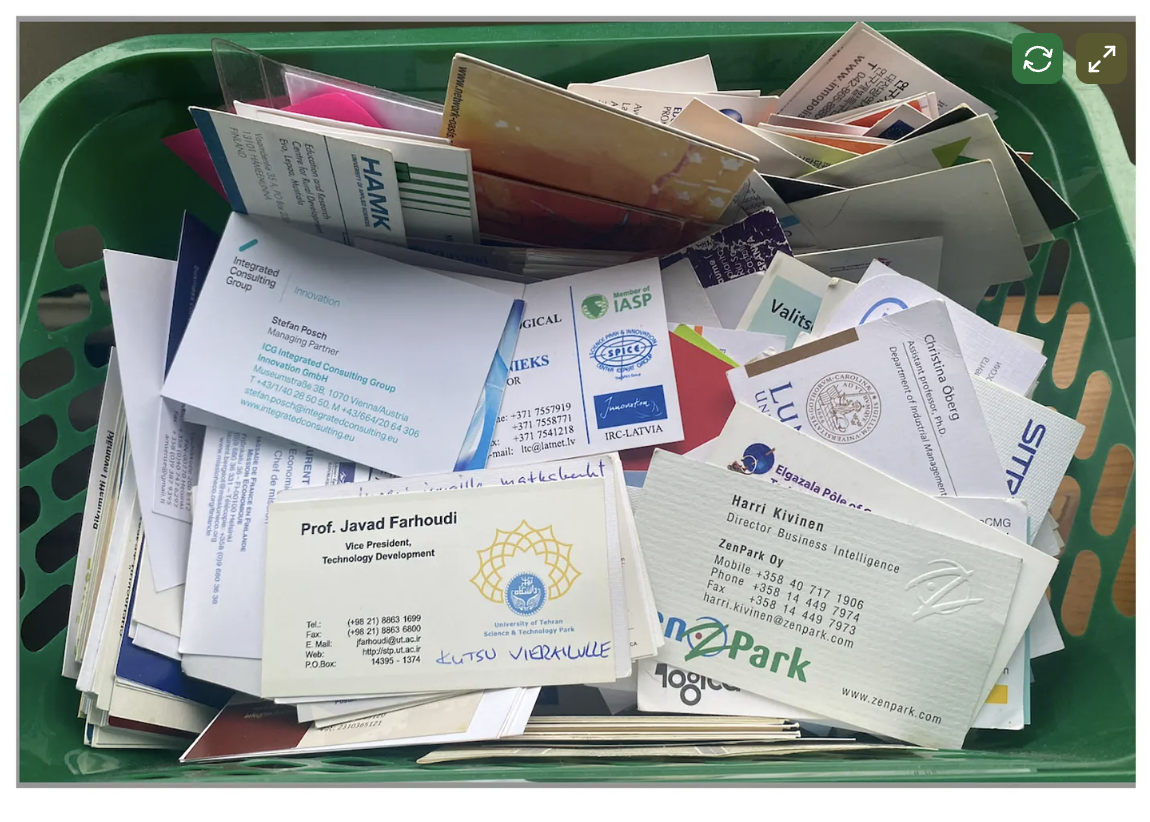
Increasing the number of meetings, conferences, and random connections does reliably produce more chance encounters. This is sometimes called coincidensity — the density of random intersections. People believing in the unlimited possibilities and magic of coincidensity have already a name – they are Coincidensity Hunters. You know the type, they are the dominant source of noise in conferences, always pushing forward their agenda while “increasing their luck surface area”. But my long experience as serendipity practitioner has shown that all this effort very seldom leads to anything positive – it does not reliably help them to harness serendipity in the original, stronger sense of the word.
The original story of the Three Princes of Serendip offers a useful contrast. The princes did not discover valuable things because they maximised their social exposure. They succeeded because they were engaged in a focused Peregrinaggio (pilgrimage), their father King Jafer prepared and educated them throughly before the pilgrimage, they paid close attention to details others ignored, and had the capacity to collaboratively reinterpret what they observed. Their advantage came from the quality of their attention and reasoning, not from the quantity of their encounters.
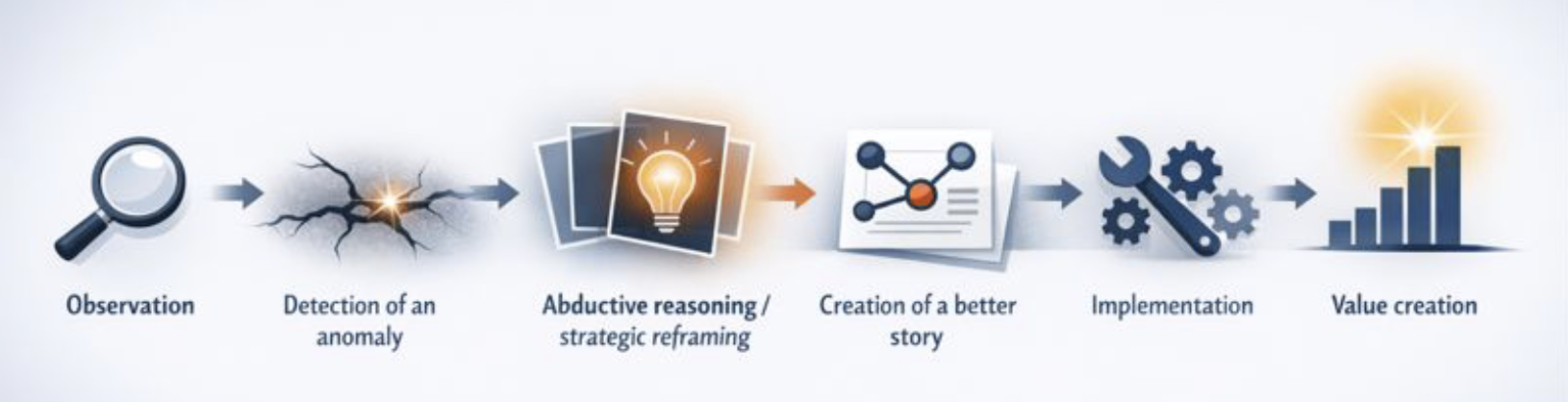
Authentic serendipity begins when an anomaly meets a meaningful question — What if this means something different than we assume? That moment requires something that volume-based strategies often undermine: sufficient attention and cognitive space.
The Hidden Costs of Maximising Exposure
Every additional encounter carries a cost. Every conference consumes time and attention. Every networking meeting fragments focus. Every new connection competes for limited cognitive resources.
Research on attention residue shows that when people switch rapidly between tasks or conversations, part of their attention remains stuck on the previous activity. This residue reduces performance on the next interaction. A professional who moves from one meeting or conversation to another without sufficient recovery is not increasing their effectiveness — they are accumulating cognitive drag.
At a certain point, the pursuit of more opportunities actively destroys the capacity to recognise valuable ones. Professionals become surrounded by signals while losing the ability to distinguish signal from noise. This is not serendipity. It is a form of cognitive overload.
There Are Cognitive Limits to Meaningful Connections
The advice to endlessly expand one’s network also collides with a basic cognitive constraint. Research by anthropologist Robin Dunbar has shown that humans can maintain approximately 150 stable social relationships at any given time. Beyond this number, relationships become increasingly superficial. We lose the capacity to track context, reciprocity, and relevant detail.
When people are encouraged to collect thousands of LinkedIn contacts or treat every event as an opportunity to grow their network, they are not expanding meaningful opportunity. They are creating a large pool of low-context connections that compete for already limited attention. The marginal value of each additional contact declines once the cognitive limit is approached.
A More Accurate View
The claim that “the more you do, the luckier you get” assumes roughly constant marginal returns to additional effort. Research on organisational search and decision-making suggests otherwise.
Additional exploration does create new possibilities. However, after a certain point the costs — opportunity costs, attention costs, and switching costs — begin to outweigh the value of further search. Even if the raw probability of success on any single attempt remains the same, the net value of each additional attempt declines because the cumulative costs keep rising.

This is why the popular “increase your luck surface area” prescription is incomplete. It focuses only on the potential upside of more activity while ignoring the rising costs that eventually dominate.
What Actually Creates Authentic Serendipity
If maximising the number of encounters is not the primary driver of valuable serendipity, what is?
In practice, meaningful serendipity tends to emerge from a more disciplined process:
-
A purposeful line of inquiry or problem worth solving
-
Focused observation within that domain
-
Detection of anomalies, absurdities, or details that do not fit prevailing assumptions
-
The willingness to ask “What if?” and pursue better explanations
-
Disciplined follow-through
Notice what is missing from this list: the requirement to maximise random interactions. The critical variable is not the quantity of stimuli but the quality of attention and the clarity of the inquiry.
The Real Constraint
Most professionals do not suffer from insufficient encounters. They suffer from insufficient attention, inadequate framing, and the inability to recognise when something genuinely important has appeared in front of them.
Increasing your luck surface area may generate more lottery tickets. It does not, by itself, improve your ability to read the ones that matter. The organisations and individuals who consistently benefit from serendipity are rarely those who maximise their surface area. They are the ones who maintain enough focus and curiosity within meaningful domains to notice what others miss — and who have developed the judgment to know what to do when they see it.
The advice to keep expanding your luck surface area is not entirely without value. But treating volume as the primary lever misdiagnoses the actual problem. In most cases, the constraint is not too few opportunities. It is too little capacity to recognise the valuable ones already present.
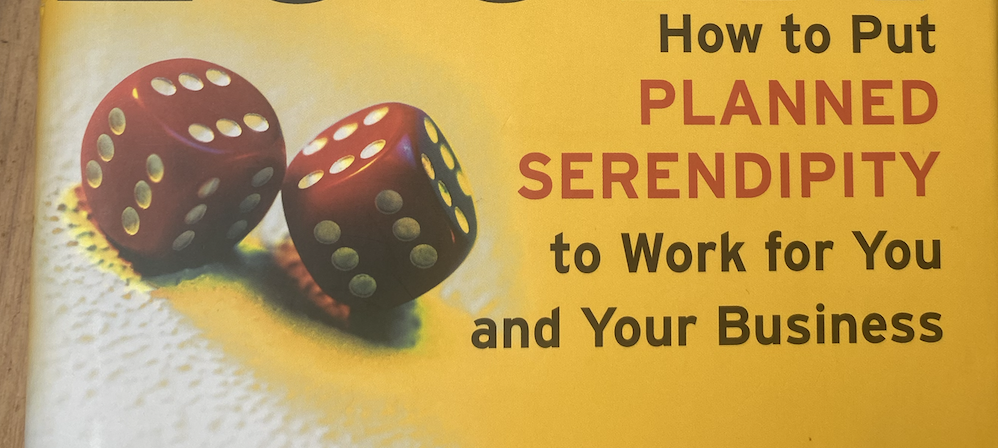
(The attached picture is a detail from a cover of Thor Muller&Lane Becker book “Get Lucky” (2012), JOSSEY-BASS;, A Wiley Imprint. My understanding is that it started slowly this “luck-mania”, which is nowadays increasingly gaining momentum in certain circles. It also shows in a refreshing way the huge flaw in human judgement – by showing the absurd assumption of wishful Coincidensity Hunters !)