

A short text recently circulated online explaining why winning the lottery does not make us happier for very long. It repeated a well-established finding from psychology: people tend to return to a baseline level of happiness regardless of whether something very good or very bad happens to them. Promotions, jackpots, and even serious accidents — after months or years, emotional life stabilizes again.
The mind normalizes experience. Researchers call this hedonic adaptation, sometimes the hedonic treadmill, and it is in many ways a reassuring discovery.
Our emotional system, it seems, is built not for permanent euphoria nor permanent despair but for continuity; without this capacity we would hardly remain functional through the oscillations of life.
The text then introduced a small practical suggestion, a sentence of five words: “These are the good days.”
Not as naive optimism but as a gentle anchoring of attention to the present moment — a way of cultivating gratitude and psychological presence despite the mind’s tendency to normalize everything. Happiness, it concluded, is not found at the end of a goal but in how we attend to experience day by day.
All of this is convincing. Yet while reading it I noticed a quiet question forming — not a disagreement, but a remainder.
If emotional life truly resets after every peak, why do certain moments remain decisive long after their emotional tone has vanished? Why do some encounters continue to guide decisions decades later, while most intense experiences dissolve into anecdote?
Because what stays is rarely the feeling itself.
Most of us remember celebrations only vaguely, conferences even less, and even very happy periods blur into a general memory of having once been happy. Yet occasionally a brief remark during an ordinary conversation, or a realization that arrives without ceremony, becomes a permanent reference point. Not dramatic, not euphoric — but strangely irreversible. After such moments the world appears arranged differently, and although everyday life continues unchanged, one no longer interprets it in quite the same way.
I encountered this phenomenon long before I had words for it.
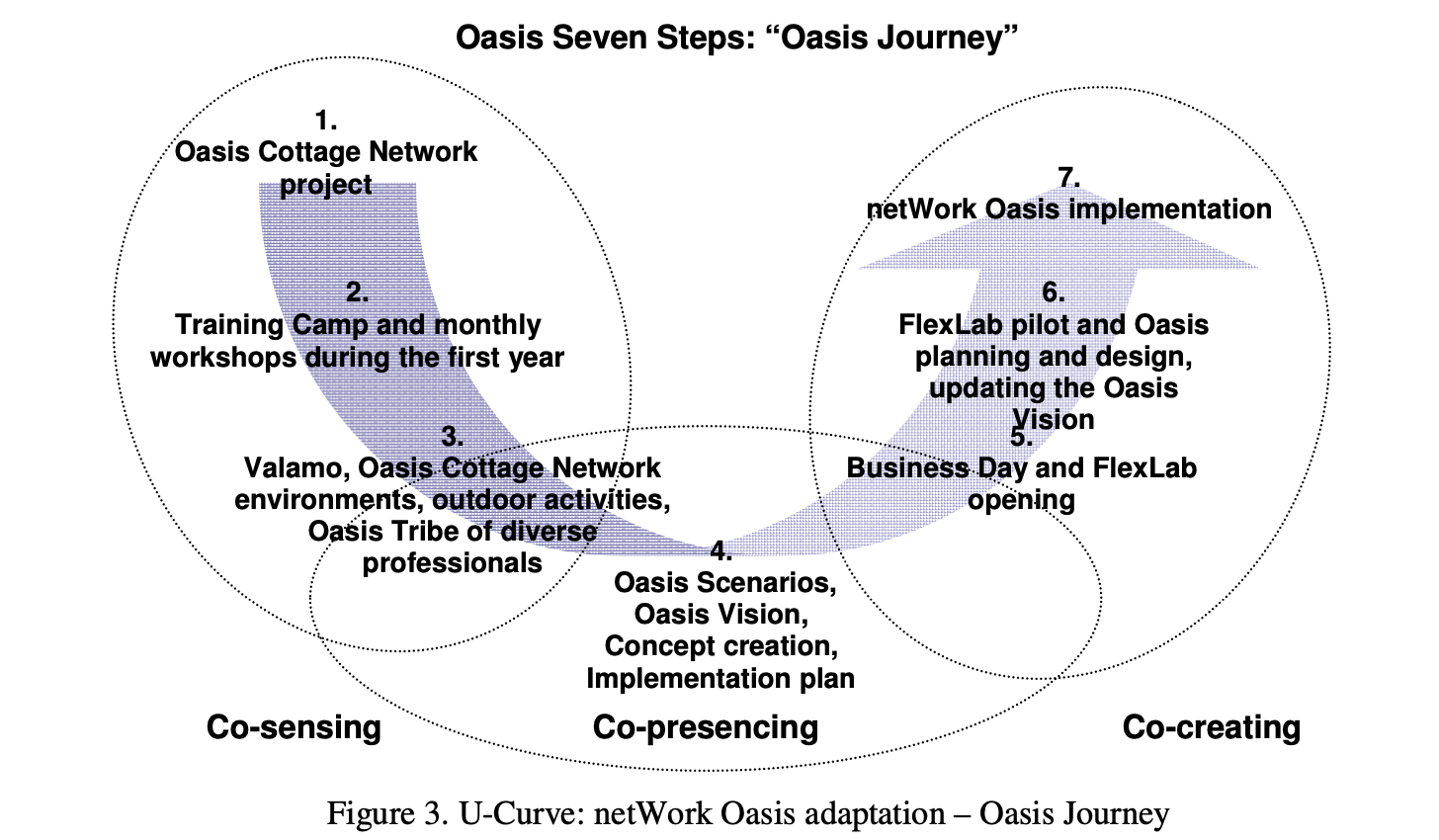
In the early 2000s I was involved in developing what later became the netWork Oasis working environment. At the time we believed we were designing facilities and services — essentially improving offices. But one observation kept disturbing the plan: people did not primarily lack space; they lacked understanding. Gradually the project stopped focusing on rooms and started focusing on conditions under which unexpected understanding could occur. Nothing spectacular marked the shift, yet everything followed from it. The success of the project did not come from any single feature but from a different interpretation of what the task actually was.
Years later, during long conversations with serendipity researcher Pek van Andel, another realization appeared with similar quietness.
Serendipity, he insisted, was not the result of unusual events nor the reward for producing more encounters; it was the capacity to recognize significance in something others would ignore.
Again, the weekend stay in Pek’s house in itself was calm, almost uneventful. I did not leave happier — but I created a new, better story! I left oriented — and orientation proved far more persistent than any emotional state.
Here lies the point where the idea of “These are the good days” becomes more interesting than it first appears.
Perhaps the sentence does not merely anchor us to the present so that we feel better. Perhaps it functions as a recognition device — a reminder that meaning rarely announces itself with intensity. We keep waiting for exceptional days to transform life, yet transformation often enters disguised as ordinary time, visible only after interpretation shifts.
Modern professional culture tends to multiply encounters in the hope of generating significance: networking sessions, curated meetings, algorithmic coffee pairings. They certainly create activity and occasionally pleasant coincidence. But frequency of interaction does not automatically produce understanding.
Most experiences add memories; a few reorganize perception. The difference is subtle but decisive.
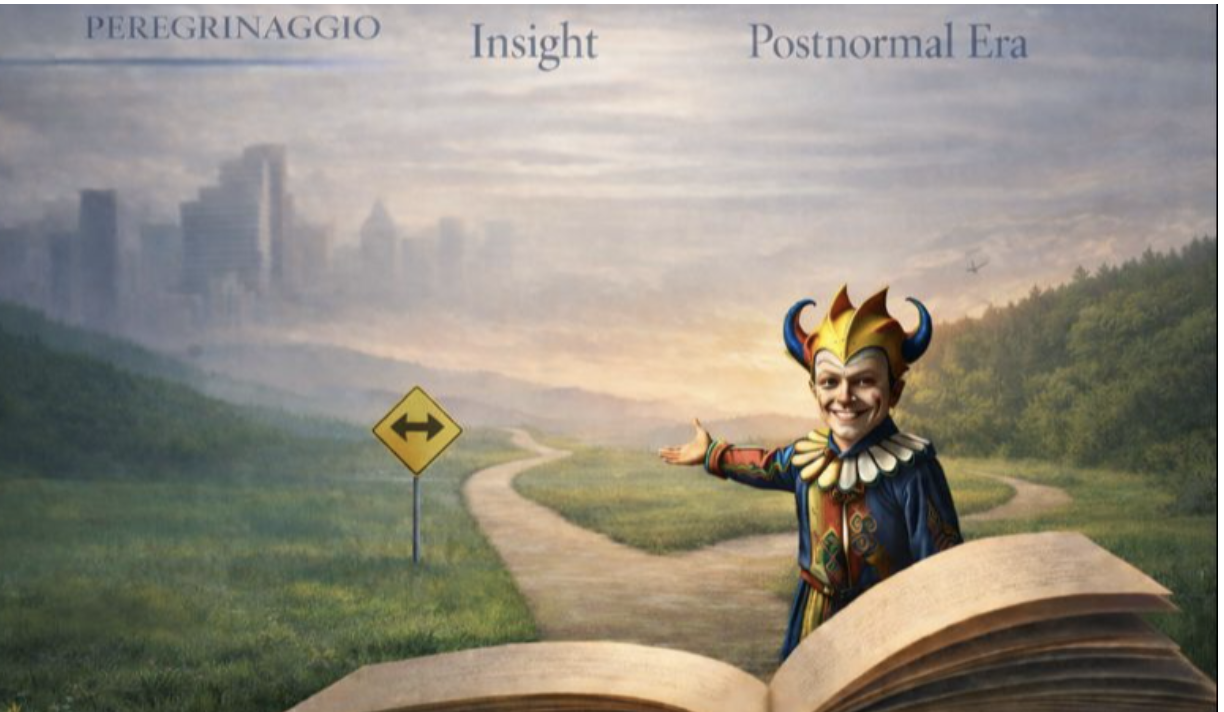
Historically there existed a figure whose role was precisely this: the jester. Not primarily to entertain, but to reveal contradictions that others were too invested to notice. The jester did not only improve the king’s mood; he improved the king’s orientation as well. Once orientation changed, decisions followed naturally, and with them the course of events.
From this perspective hedonic adaptation describes something real yet incomplete. Emotional intensity fades — but interpretive shifts accumulate.
Life does not become better because peaks grow higher; it becomes different because understanding deepens. And when understanding changes, the same days begin to appear in another light.
So the sentence “These are the good days” may not be advice about appreciating happiness while it lasts.
It may be a recognition that meaning often arrives quietly enough to be overlooked.
Not every day becomes good because it feels extraordinary.
Some days become good because they are finally understood.


Core Idea: Emotional Homeostasis. => What it means:
Our emotions aren’t designed for extreme highs (euphoria) or lows (despair) to last. Instead, they tend toward a stable “set point” or baseline, much like how your body regulates temperature or blood sugar (homeostasis). No matter what happens—winning the lottery, losing a job, or even major life changes like marriage or injury—your overall happiness level resets over time to roughly where it was before.
Profoundly human aspect: This isn’t a bug; it’s a feature of human psychology. Evolution wired us this way because constant ecstasy would make us complacent (e.g., ignoring threats), and endless misery would paralyze us. Stability keeps us functional and motivated to seek improvement without getting stuck.