How a Civil War survival rule became everyday business language
What death, time, and creativity quietly reveal about how we live
I did not intend to write about time again.
Then I read Arianna Huffington’s beautiful reflection on what death teaches the living. Not dramatic or sentimental. Simply clarifying. Her observation was almost uncomfortable in its simplicity: when people approach the end of life, they don’t suddenly discover new values. They rediscover the ones they ignored while busy living efficiently. Here is a quote from the article:
Remembering that we’re all in the in-between and that our time is limited can fill that time with meaning, purpose, and connection.The wisdom we seek at the end of life is available to us now.
And that brought back a question I once asked years ago:
But this time one word – deadline – refused to leave my mind. We use it casually, professionally, responsibly — without noticing what the word actually means.
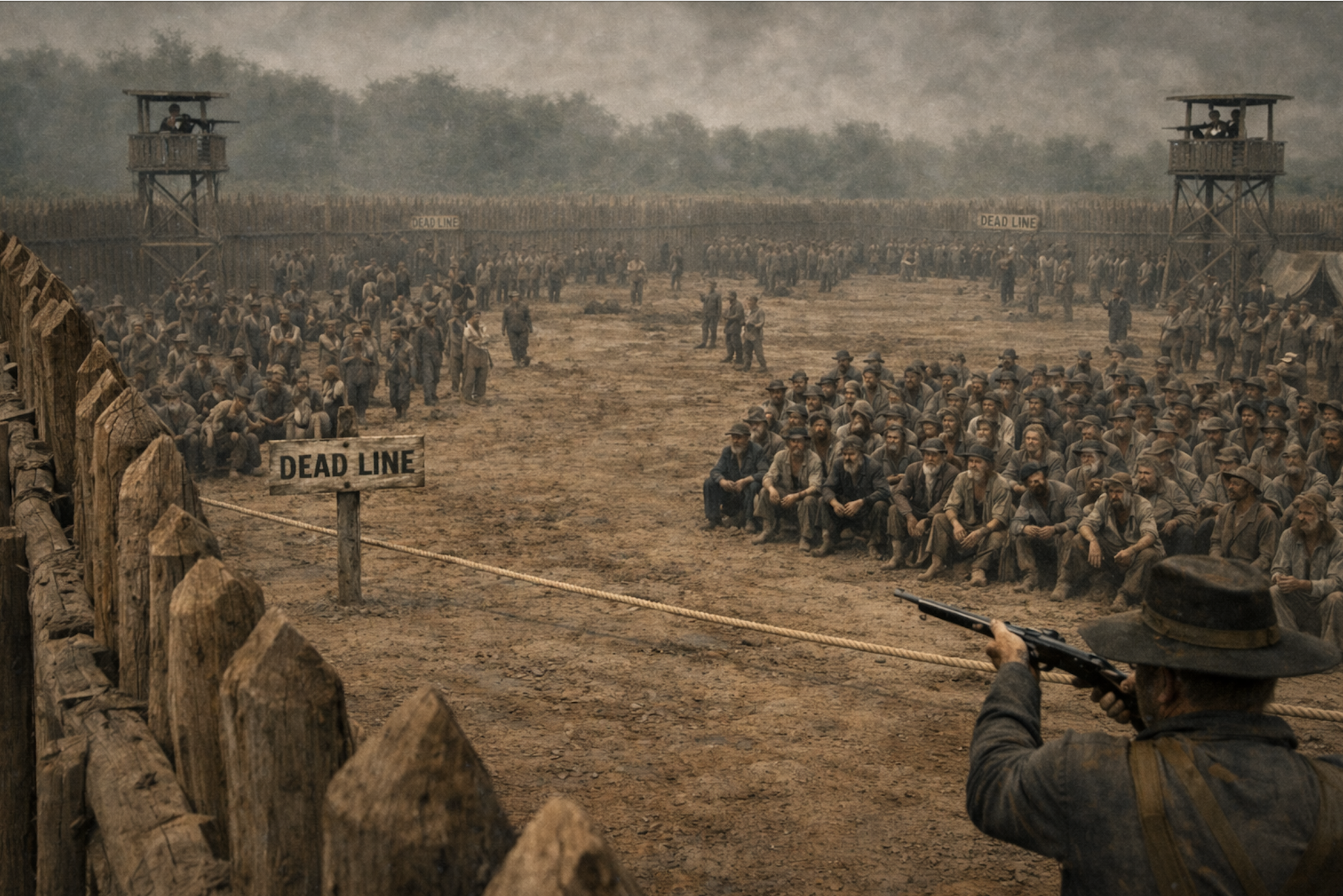
The term does not come from business, education, or productivity systems. It comes from American Civil War prison camps, most notoriously Andersonville. Inside the camp a physical line was drawn several feet before the outer fence. Guards warned prisoners: Cross this line — and you may be shot immediately.
No warning. No negotiation. The line marked the boundary between existence and non-existence.
It was called the dead line.
Later the newspaper industry adopted the word for the moment after which a newspaper page could no longer be changed before printing. From there it migrated into offices, schools, and everyday speech — where today it means sending a presentation on Tuesday at 16:00. We borrowed a word describing mortal danger to coordinate administrative activity. And then we forgot what it originally was about.
The quiet psychological effect
Modern deadlines no longer protect life. But psychologically they still behave like survival boundaries.
When a deadline approaches, awareness narrows. Context disappears. The task overtakes the purpose of the task.
We stop asking: Does this matter? We start asking: Is this finished?
Manufactured urgency replaces meaning. And this is precisely the opposite effect of real mortality. Awareness of death clarifies life. Deadlines obscure it.
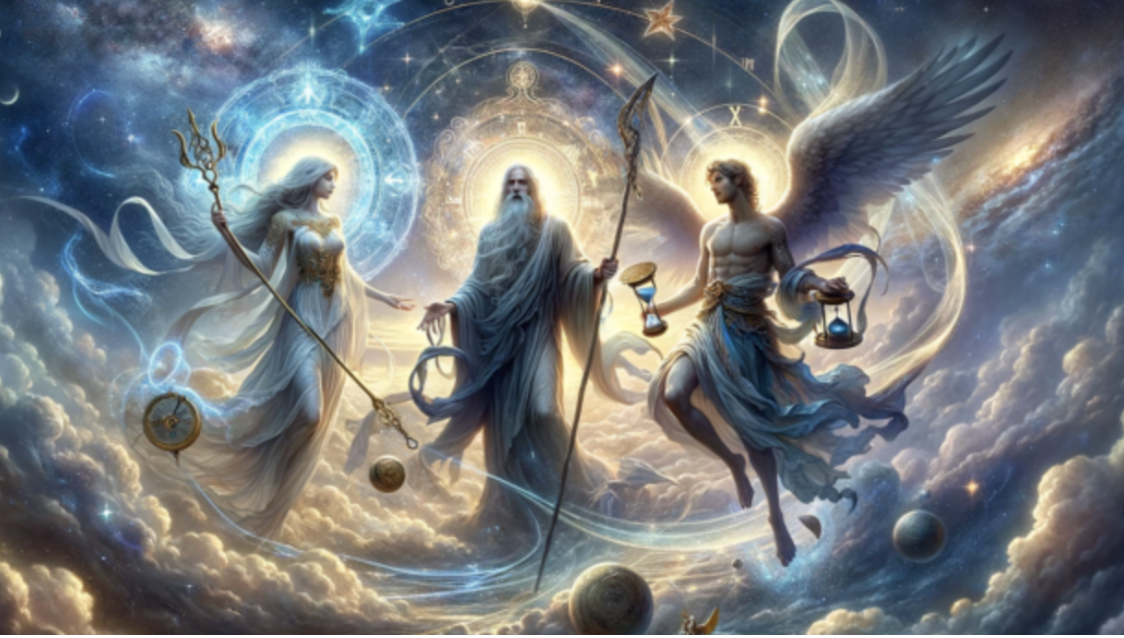
Chronos and Kairos
The ancient Greeks had two words for time.
Chronos — measurable time Sequential. Predictable. Schedulable. The time of calendars, quarterly reports, and deadlines.
Kairos — experiential time The right moment. Readiness. The opening in reality when something becomes possible.
Chronos asks: When must this be done? Kairos asks: When does this become the right action? Most failures are not late decisions — they are decisions made before they make sense.
Instead of asking do we meet the deadline, we better ask – are we ready.
Modern organizations run almost entirely on Chronos. Creativity does not. Insight does not appear because a meeting invitation says 14:30. Understanding does not accelerate because the quarter ends Friday. Deadlines belong to Chronos. Discovery belongs to Kairos. Most frustration in knowledge work comes from demanding Chronos reliability from Kairos phenomena.
A living example of the mismatch
Consider Elon Musk. His timelines famously slip. Predictions fail. Delivery dates move. In a traditional managerial sense this looks unprofessional.
But something deeper may be happening. Musk consistently speaks from the logic of Kairos — technological readiness, physical constraints, emerging possibilities — while the public hears Chronos — calendar commitments. And his role as CEO of Tesla forces him to translate those insights (unsuccessfully!) into Chronos promises: production targets, delivery quarters, investor expectations.
He communicates event-time, but must operate inside calendar-time.
So estimates become wrong in Chronos terms while often directionally right in Kairos terms.
The controversy is therefore not merely about accuracy. It is about interpretation between two temporal systems.
Organizations want predictability and time schedules. Yet, innovation operates on emergence.
Why some moments change us
Not every hour has the same weight. Some days pass entirely in Chronos — measurable, completed, recorded. Nothing wrong happens. Nothing remains.
Enter flow zone and occasionally a moment refuses accounting. A conversation lingers. A realization rearranges priorities. A simple observation makes the future feel different.
These moments cannot be scheduled. They can only be noticed.
Deadlines manage activity. Attention shapes life.
And attention requires psychological space — a space urgency constantly consumes.
The quiet reversal
We did something subtle in modern culture. Referring to the message of Arianna Huffington, we replaced mortality, which gives meaning — with deadlines , which simulate urgency.
One helps us experience life. The other helps us postpone it efficiently.
John Lennon captured it in a single sentence:
Life is what happens to you while you are busy making other plans.
Perhaps the problem is not that life is short. It is that we keep converting it into preparation for a moment that never arrives.
And at the end we discover there was nothing we were actually preparing for.
We forgot living.