Twenty years ago, I coined a phrase that became the name of my blog, my philosophy, and eventually a guiding principle for everything I do: “Respect Serendipity”.
It wasn’t meant to become a brand. It was a warning. A declaration. A gentle but firm reminder: this is a life changing phenomenon, something worth of advocating and protecting!
Back then, almost no one talked about serendipity in any context, it was never mentioned in innovation and creativity workshops or organizational design processes. For our netWork Oasis conceptual planning team it was an intriguing, new word presented unexpectedly by a respected team member in our workshop summer 2004. And surely for me it was a life changing moment! When Lauri Gröhn (thanks again) explained it in more detail it struck me like a lightning. And I am forever thankful for Lauri that he knew what he was talking. I am sure that a shallow “sales talk” had no chance to make any lasting impression for me. Lauri was professional, and a seasoned expert of our team and could add a decisive perspective to our Oasis -concept – and an emergent perspective, which changed my entire career forever! Maybe we could call that workshop a serendipitous encounter … (jesterish comment)
Soon after that revelation in 2004, I began actively advocating for serendipity. I gave keynote presentations, wrote academic and conceptual papers, and even stood in front of audiences of 500+ people at major international events—like the IASP World Conferences in Bergamo (2004), Beijing (2005), and Barcelona (2007). These experiences gave me the invaluable opportunity to engage in conversations with hundreds of curious, thoughtful professionals from around the world. I listened, I learned, and I responded. This dialogue across borders and disciplines didn’t just deepen my understanding—it cultivated it. And along the way, it confirmed what I had already begun to sense: serendipity is a rare and life-changing phenomenon that deserves to be understood, advocated for, and—above all—protected.
But over the past two decades, something in the way researchers and self-declared “experts” talk about serendipity has shifted.
And not for the better.
Today, serendipity is everywhere—on TED stages, in productivity podcasts, and sprinkled liberally across LinkedIn posts. It’s become shorthand for any feel-good surprise, any unexpected win, any convenient accident. It has shifted from valuable insight to infotainment. We’ve seen it diluted, distorted, and rebranded—usually by those who want to sell it rather than understand it. And in the process, it has lost its depth, its dignity, and above all, its precision.
Why respecting serendipity is urgently needed? To Respect Serendipity is to resist the urge to commercialize it. It’s to hold the concept in its full complexity and power. It’s to recognize that true serendipity isn’t a trick or a hack—it’s a discipline of mind, cultivated over time. It’s not about bumping into someone at a startup event. It’s not about following your sexual drive and neglecting your work (ref. to Steve Jobs – more in tomorrow’s blog). Respecting serendipity means not flattening it into motivational slogans, not confusing it with mere coincidence, and not selling it like a protein bar at a wellness expo.
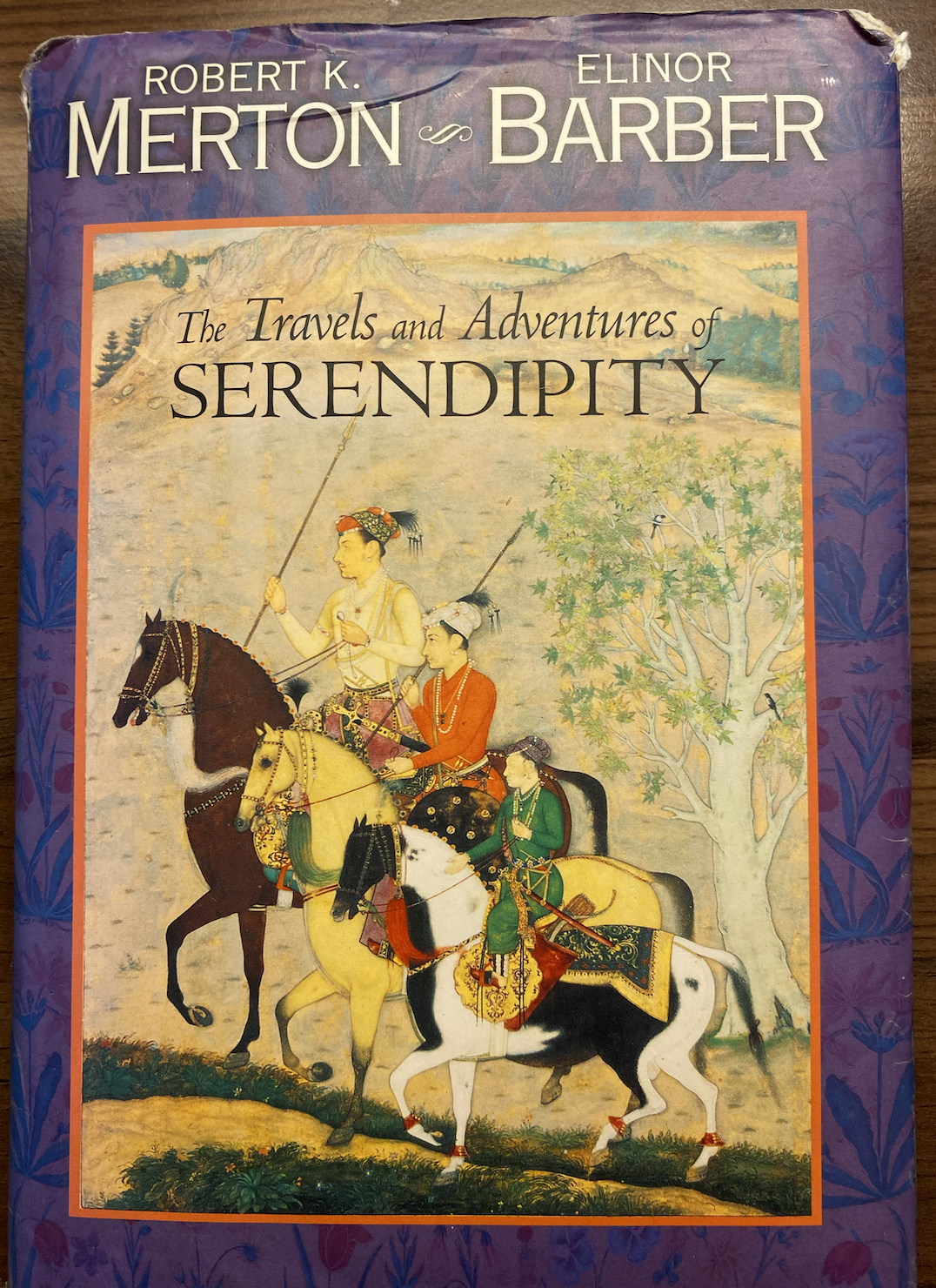
For me, as a long time advocate of the original serendipity, the message is strong; most of what’s marketed as serendipity today is not serendipity at all. If you’ve followed my work, you already know where I stand. I’ve always grounded my thinking in the definition offered by sociologist Robert K. Merton, who articulated it clearly in his excellent book The Travels and Adventures of Serendipity:
“Serendipity is a quality of mind which, through awareness, sagacity, and good fortune, frequently allows one to discover better things than originally sought.”
That one word—frequently—is the most elementary, and it’s exactly the word which has been withdrawn from these new and hedonistic interpretations of serendipity! And in most cases awareness is not randomness or passive presence. It’s the cultivated ability to perceive significance where others see noise—a discipline of attention that opens the door to the unexpected. Sagacity is not gut feeling or unchecked desire. It’s not about acting on impulse—biological or emotional—and certainly not about rewriting history around a moment of lust. Sagacity is thoughtful discernment, the mental sharpness to connect the dots with purpose. Good fortune is not luck in the naïve or romantic sense. It’s not winning the cosmic lottery. It’s the kind of fortune that emerges when awareness and sagacity are already engaged and ready. And most critically: frequently—not once-in-a-lifetime, not cherry-picked after the fact, not retrofitted to a TED talk. This is the serendipity we should be protecting. Not the glossy caricature sold to us by conceptual dilutionists, but the profound, frequently unfolding phenomenon that rewards those who are truly prepared. This is what we are called to respect. This is what we are losing.
Around 2009, I felt the need to take my mission one step further—and gave myself a symbolic name: Serendipitor.
Like a philosophical cousin of the Terminator, but driven not by destruction, but by defense.
A defender of serendipity’s original essence and brilliance.
A guardian of its intellectual and human beauty.
A reminder that even valuable ideas need protectors.
Since October 2009, @Serendipitor has been my name on X (formerly Twitter), Instagram, and elsewhere. Not just a username—but a position, a purpose, and a bit of jest. Because defending something valuable seriously doesn’t mean you can’t have ‘a smile in mind.’ So now, twenty years later, I return to my phrase with renewed urgency. This is Serendipitor’s invitation:
Respect Serendipity!
Not just as a slogan. As a standard. As a call to think deeper, act wiser, and speak more truthfully!
This was Part 1 of my three 20 Years of Defending Serendipity! blogs. In the days ahead, I’ll be sharing two follow-up blog posts:
Part 2: Serendipity vs. Survivorship Bias – Stop Glorifying the Lucky Exception (tomorrow)
Part 3: Twelve Years Later: From Coincidensity to Conceptual Dilution — Why It’s Time to Reclaim Serendipity (on Monday 23rd)
Stay on the channel for these updates!